This page is an Independent Review. It may earn a commission through affiliate links at no additional cost to you. It is not the official ProvaDent website.
Ingredient analysis

ProvaDent Ingredients: What Is Inside?

The ingredient list is where most supplement reviews either oversell or undersell a product. The goal here is to do neither — just a clear look at what ProvaDent contains, what science says about each component, and what remains genuinely uncertain.

Quick answer: ProvaDent contains organic xylitol, cranberry extract, purple carrot powder, a proprietary blend called BioFresh Clean Complex, and probiotic strains such as L. reuteri and L. paracasei. Ingredient-level reasoning is reasonable, but exact doses are not fully disclosed.

What Is in ProvaDent?

Based on available product information, ProvaDent combines plant-based ingredients with several probiotic strains. Not every listing discloses the full detail of each component, which is part of what this analysis examines.

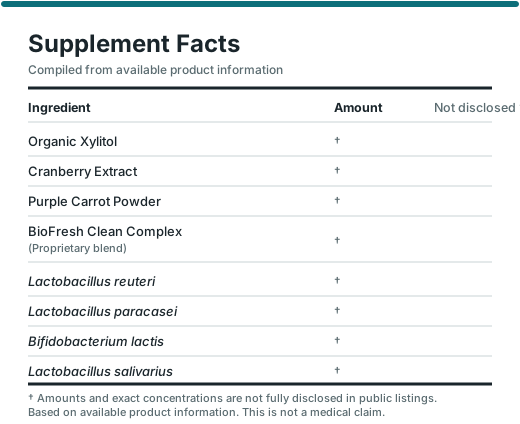
The panel below is compiled from the official listing and reflects only what is publicly stated. Where the manufacturer has not disclosed exact amounts or concentrations, we say so rather than guessing.

ProvaDent supplement facts panel listing xylitol, cranberry extract, purple carrot powder, BioFresh Clean Complex, and four probiotic strains
Supplement facts compiled from the official listing. Amounts are not fully disclosed.
Ingredient What it is Known rationale Uncertainty
Organic Xylitol A naturally derived sugar alcohol commonly used in oral-care products. Xylitol is among the most researched ingredients in oral care. It is frequently associated with reducing the oral environment's support for certain cavity-associated bacteria, which is why it appears in gums, mints, and toothpaste. Its presence in a supplement is unremarkable but logical. Xylitol is most studied in direct-contact formats like gum or rinse, where it stays in the mouth. In a capsule that is swallowed, its concentration in the mouth depends on delivery — the effect is not automatically identical.
Cranberry Extract A plant extract rich in polyphenols, often studied for bacterial-adhesion effects. Research has explored how cranberry proanthocyanidins may interfere with the ability of certain bacteria to attach to surfaces. That concept is often cited in oral-health and urinary-tract products. Much of the cranberry research is not specific to oral probiotics, and adhesion effects depend heavily on dose and format.
Purple Carrot Powder An antioxidant-rich plant powder included for nutrient support. Purple carrots contain compounds with antioxidant activity. Antioxidant support is a common, low-risk reason to add a colorful plant powder to a formula. Direct links between purple carrot powder and oral-health outcomes are not well established in supplement research.
BioFresh Clean Complex A proprietary blend referenced across ProvaDent product listings. The manufacturer presents it as a specialized complex intended to support a balanced, fresh oral environment. Because it is proprietary, the exact components and amounts are not disclosed publicly. This makes independent evaluation impossible.
Probiotic Strains Four strains commonly associated with oral-health supplements. The strains frequently cited include <em>Lactobacillus reuteri</em>, <em>Lactobacillus paracasei</em>, <em>Bifidobacterium lactis</em>, and <em>Lactobacillus salivarius</em>. Each has individual research exploring oral-health markers such as gingival health, breath, and microbial balance. Published studies may use different strains, concentrations, or delivery methods than a specific consumer product. Strain identity alone does not guarantee identical results.

Organic Xylitol

What is known

Xylitol is among the most researched ingredients in oral care. It is frequently associated with reducing the oral environment's support for certain cavity-associated bacteria, which is why it appears in gums, mints, and toothpaste. Its presence in a supplement is unremarkable but logical.

What remains uncertain

Xylitol is most studied in direct-contact formats like gum or rinse, where it stays in the mouth. In a capsule that is swallowed, its concentration in the mouth depends on delivery — the effect is not automatically identical.

Our assessment

Reasonable inclusion. It supports the formula's oral-care positioning without being a sole reason to buy.

Cranberry Extract

What is known

Research has explored how cranberry proanthocyanidins may interfere with the ability of certain bacteria to attach to surfaces. That concept is often cited in oral-health and urinary-tract products.

What remains uncertain

Much of the cranberry research is not specific to oral probiotics, and adhesion effects depend heavily on dose and format.

Our assessment

Interesting supporting ingredient with a plausible rationale — not a proven driver of outcomes on its own.

Purple Carrot Powder

What is known

Purple carrots contain compounds with antioxidant activity. Antioxidant support is a common, low-risk reason to add a colorful plant powder to a formula.

What remains uncertain

Direct links between purple carrot powder and oral-health outcomes are not well established in supplement research.

Our assessment

Supportive nutrient rather than an active oral-health ingredient. Harmless and unremarkable.

BioFresh Clean Complex

What is known

The manufacturer presents it as a specialized complex intended to support a balanced, fresh oral environment.

What remains uncertain

Because it is proprietary, the exact components and amounts are not disclosed publicly. This makes independent evaluation impossible.

Our assessment

Proprietary blends are common, but they are also the reason transparency-focused buyers may hesitate. Nothing harmful is implied — only a lack of full clarity.

Probiotic Strains

What is known

The strains frequently cited include <em>Lactobacillus reuteri</em>, <em>Lactobacillus paracasei</em>, <em>Bifidobacterium lactis</em>, and <em>Lactobacillus salivarius</em>. Each has individual research exploring oral-health markers such as gingival health, breath, and microbial balance.

What remains uncertain

Published studies may use different strains, concentrations, or delivery methods than a specific consumer product. Strain identity alone does not guarantee identical results.

Our assessment

The relevant research direction is real, but "contains probiotics" should not be read as "guaranteed probiotic outcome."
What This Means in Practice

Put together, ProvaDent's ingredients form a plausible oral-health supplement. Xylitol and cranberry extract bring well-reasoned oral-care concepts to the table, the probiotic strains are common in this category, and the supporting nutrients are harmless additions.

The honest caveat is that ingredient analysis is not proof of product performance. Here is the distinction that matters:

  • Ingredient evidence — research about a substance generally, often in different formats.
  • Product evidence — proof that this specific formulation, at this exact dose, produces a result.

ProvaDent has reasonable ingredient-level support. Its formula is not trying anything unreasonable. But public disclosure does not currently allow the kind of precise, product-level verification some buyers would prefer.

A supplement's ingredient list describes what is inside — it does not, on its own, confirm what any specific person will experience.

Want the Full Product Picture?

Read the full ProvaDent review, explore review and complaint patterns, or compare it with ProDentim.

Check the Current ProvaDent Details

The official manufacturer page lists current product information and guarantee terms.

Check the Official Offer

An independent review site. The official page is maintained by the manufacturer.